Warning (PG16)
This episode contains adult themes. Reader discretion recommended.
On bad nights, the nights when Seraphina’s face appeared in every shadow, when Rei’s six-year-old voice echoed in the wind off the water, when the guilt sat on his chest like a concrete block, Jin would do all three bars in sequence. Start at La Cueva for the quiet numbness, move to El Barco Hundido for the distraction of Mateo’s stories and end at La Bodega for Diego’s poetry and the chance to sit in the corner and simply exist until closing time.
Rosa-Maria never commented on the nights he ordered five Tres Tercios instead of two. Mateo’s stories got longer and more elaborate as the evenings wore on, as if he sensed Jin needed more to fill the silence. Diego would slide napkin-poems across the bar without being asked, not stopping until Jin’s pocket bulged with folded paper.
El olvido es un país donde siempre llueve y nunca te secas.
Forgetting is a country where it always rains and you never dry out.
Jin read that one so many times the folds wore through and the ink blurred from his fingers. He kept it anyway, tucked beside the first one, a map of a nation he’d never meant to join. On better nights, the ones that passed for good in this new life, he’d stick to one bar. Let the rhythm of the place carry him. Watch the other regulars with their own rituals, their own drinks, their own ways of forgetting.
The old man at La Cueva who ordered the same beer every night and nursed it for three hours. The couple at El Barco Hundido who always sat at the same table and never spoke, just held hands across the worn wood. The woman at La Bodega who cried quietly into her wine every Thursday, like clockwork, and left when Diego played a specific tango on the ancient jukebox.
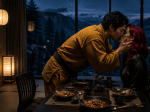
We’re all just haunting ourselves, Jin thought, dressing our ghosts up. One such night, mild and still, he sat at La Bodega with his second Tres Tercios and watched Diego wipe glasses that were already clean. The bar was empty except for them. “Long day?” Diego asked suddenly. “Every day”, Jin chuckled. Diego set a glass down and picked up one he had wiped earlier, “Then why stay?” Jin turned the drink in his hands, watching the way the bar lights caught the faint bubbles, “Because leaving means going somewhere else. And that…” He trailed off.
Diego watched Jin retreat into himself. They sat in silence for a while. Then Diego reached under the bar and brought out a bottle Jin had never seen, dark glass, no label, the kind of thing someone made in their basement and shared only with people they trusted. “Try this,” Diego said, pouring a finger into a fresh glass, “My grandfather’s grappa. Family recipe from back in ancient Italy” Jin’s hand paused halfway to the glass. Italy, the word landed like a punch he hadn’t seen coming, “No thank you, I don’t—”
“Just try it”, Diego’s voice was gentle but firm, “One sip, then back to your Tres Tercios.” Jin tried it. The grappa was harsh, floral, ancient; nothing like the sweet comfort of his invented drink. It tasted of hillsides he’d seen a lifetime ago and history that belonged to someone else: to Seraphina, to the family she’d fled, to their daughter. “It’s got a good burn. From… where in Italy?” he managed. “A small village near Naples. My people came over on a boat”, Diego shrugged, “The grappa’s the only inheritance that survived.”
Naples was where he had met Seraphina, where she grew up among fishermen, gamblers and family loyalty that demanded everything. It was where her brothers had been murdered, the origins of the reasons they’d fled in the first place. Jin set the glass down carefully, precisely, the way you handle something that might explode. “Thank you,” he said, “But I think I’ll stick to Tres Tercios.”
Diego studied him for a long moment, then nodded. He took the grappa away and poured Jin another of his usual drink without commentary. Jin drank it faster than he should have. Then another, then another. That night, he didn’t whisper names into the glass. He just drank, letting the numbness spread. The napkin from that night found its way into his pocket alongside the others. Diego must have slipped it there while Jin was staring at nothing.
Tres Tercios no son suficientes cuando el fantasma tiene sed.
Three thirds aren’t enough when the ghost is thirsty.
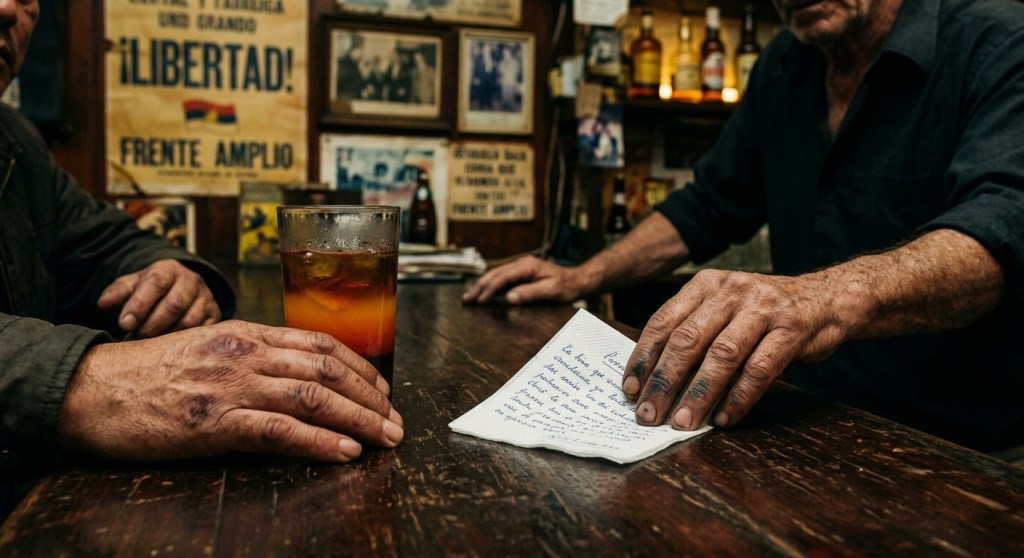
Jin read it the next morning, head pounding, mouth dry, the taste of regret coating his tongue. He read it three times. Then he folded it carefully and added it to the collection. Rei would never know his new existence, only the way he’d been before: foolish, loving, weak. She’d remember the father who sold her, the man who couldn’t protect her, the failure who’d fled instead of fought.
But in the Montevideo bars with the patient bartenders and the drink he’d accidentally invented, Jin could almost believe that wasn’t the whole story. That somewhere beneath the guilt and the grief and the gallons of booze, there was still the man Seraphina had loved. The father Rei had once looked at, like he hung the moon up for her every night.
Jin kept sitting on barstools, watching port lights flicker across dark water, whispering and swallowing names into glasses. The humidity floated around outside, thick and clinging to everything. Inside, his glass was cold, the rum biting just enough, and for a few hours each night, Jin almost forgot what he was running from. Almost was enough, because it had to be.
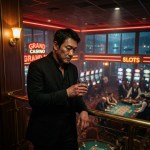
Eventually he found steadier work at La Sirena Roja, a mid-sized casino perched above the waterfront, its red lights flickering like a heartbeat. He stood by the doors, the cages or the VIP balcony, depending on the night, wearing a rented suit that never quite fit. The regulars came to know him as El Boxeador, because of the way he watched the room, weighing every man like he might still step into the ring with them, and the way he boxed drunks out of the casino when necessary. His life settled into a predictable, numbing rhythm.
In the mornings he woke with an arid mouth and a throbbing temple, stumbled into a shower with water that was always too cold, and smoked on his balcony until the city noise shook the fog from his skull. Breakfast was a cup of instant coffee and half a cigarette.
Afternoons he ran errands for La Sirena Roja; moving crates, checking deliveries, escorting high-rollers from the marina, filing reports when someone got stabbed behind the slot machines. When he passed mirrors, he barely recognized himself, his biological alternations making him look younger and more generically Asian in an uncanny way. He avoided his own reflection, even as he told himself he preferred his new appearance.
The evenings were always the same: security work, neon lights pulsing against his skin, the whiff of perfume and desperation, chips clattering, dice rolling, men swearing under their breath when luck turned against them. Jin watched enthralled, because if he stopped watching his own memories wandered back to him.
Nighttime was the worst. After his shift he stayed to gamble, not big sums, not anymore, but enough to feel something. Enough to hear Seraphina’s voice echoing, “You’re a good man, Jin, but a fool…” He chased the high, the rush, the sudden jolt of winning a hand, the familiar punch of losing it. The world narrowed to cards, numbers, odds. Sometimes he won. Mostly he didn’t.
And when he drank his rum heavy Tres Tercios, he tried to drown the knowledge that Seraphina died because she tried to save him, because she confronted the wrong men in Mirage to protect them from a debt he should never have made. He blamed himself quietly, constantly. Although guilt was a familiar heavy thing, Jin had never been strong enough to hold heavy things for long.
So he drank more, gambled higher and tried to feel alive in bursts, like cheap fireworks. Most nights he ended up alone at a back table, staring into a glass of pure caña and thinking about the weight of Seraphina’s hand on his cheek, about Rei asleep in his lap when she was small, about the alley where he last saw his wife alive. The memories came and went like waves, gentle until they weren’t.



Leave a Reply